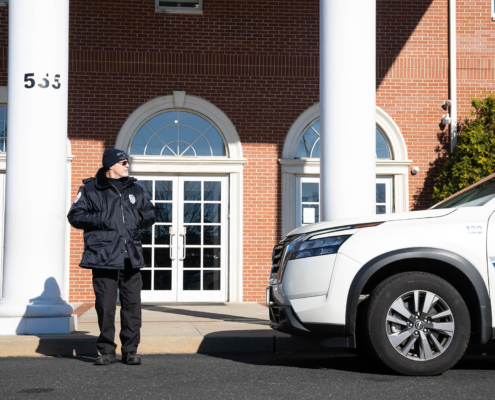
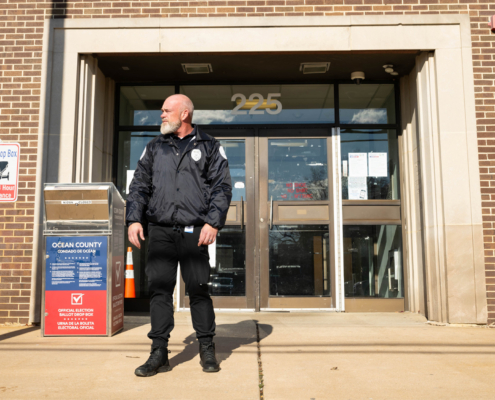
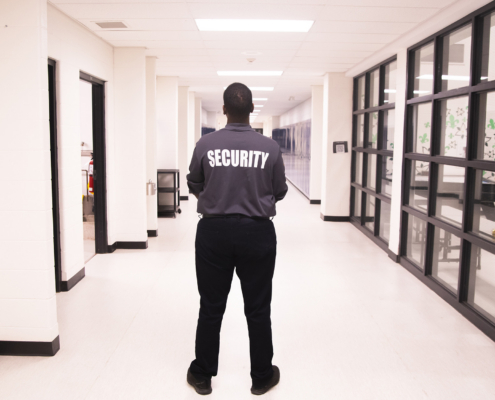
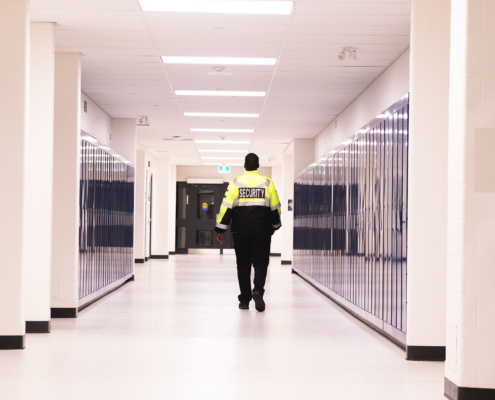
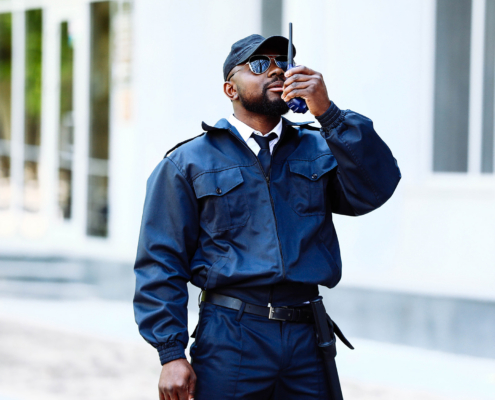
The security model that fits most healthcare environments is unarmed guards trained in de-escalation. Hospital and clinic settings are built around patient trust, clinical focus, and a culture of care. An armed presence in patient-facing areas is not appropriate in most cases, and it’s not necessary for the majority of the risk healthcare facilities actually face.
What de-escalation-trained guards bring is the ability to interrupt an escalating situation while it’s still manageable. A guard positioned near a waiting area can identify the behavioral signals that precede a confrontation — rising voice, pacing, agitated posture — and step in with a calm, authoritative presence before a physical incident forms. That’s the intervention point that no camera or access control system can provide. Technology records events. Trained guards prevent them.
There are situations where armed coverage is appropriate: psychiatric units with high-acuity patient populations, after-hours pharmacy settings, and specific overnight configurations where the risk profile calls for it. IronRock builds coverage recommendations around the specific environment of each facility.